I spent $412 testing sleep aids so you don't have to
By Oliver Brown
Featured in




You've seen them. The $9 melatonin gummies on Amazon with 4.4 stars and 38,000 reviews. Then you scroll and there's the $24 "extra strength." Then the $41 "clinical formula." And you think: what am I actually missing here? The ingredient list looks the same.
I spent fourteen months and $412 finding out.
Spoiler: the expensive ones didn't fail me differently. They failed me the same way — just more of it. Asleep fast, awake at 2:40, and then a morning I had to claw my way through. The receipts changed. The pattern didn't.
Here's what nobody tells you about why almost every sleep aid on the shelf fails the same person in the same way.
- The Dose Arms Race Nobody Questions
- The Swallow Gap: Why 5mg Can Beat 10mg
- "Fast-Acting" That Takes 45 Minutes
- When "Clinically Studied" Means "The Study Used Something Else"
- The Real Cost: The Morning Tax
- 5 Things That Changed When I Switched (And One That Didn't)
- The Maths Nobody Shows You
- My Personal Choice
- FAQ
The Dose Arms Race Nobody Questions
The first bottle I bought said 3mg.
The next one said 5mg. Then 10mg. Then I found one at 12mg, and one selling itself as "maximum strength" at 20mg, and at some point I stood in the aisle holding it and thought: why does this number keep going up?
Here's the thing nobody in that aisle tells you. Your own body makes melatonin in amounts measured in micrograms — a small fraction of a single milligram. Not 10mg. Not 20mg. So when a label offers you twenty times a physiological amount, that isn't generosity, and it isn't science. It's compensation for something.
I took the 10mg for six weeks. It worked, in the worst possible way: gone in twenty minutes, awake at four with a headache, underwater until noon. So I did what the aisle trains you to do and went looking for more.
That's the arms race. Every brand raises the number because the number is the only thing they can compete on. And nobody stops to ask what the number is compensating for.

The Swallow Gap: Why 5mg Can Beat 10mg
Here's what I eventually worked out, and it isn't complicated.
When you swallow something, it does not go to your brain. It goes to your stomach, then your small intestine, then through the liver — which metabolises a large share of it before any reaches your bloodstream. Pharmacologists call it first-pass metabolism. For melatonin specifically, oral bioavailability is low and highly variable between people — a large portion of what's on the label never arrives at all, and how much arrives differs from you to your neighbour.
So the dose gets built for the loss.
That's the whole answer to the aisle. 10mg isn't on the label because you need 10mg. It's on the label because the route wastes most of it and nobody wants to sell the bottle that does nothing.
It's like being told to shout because the person you're talking to is three rooms away. The problem was never your volume. The answer isn't a louder voice.
It's walking into the room.
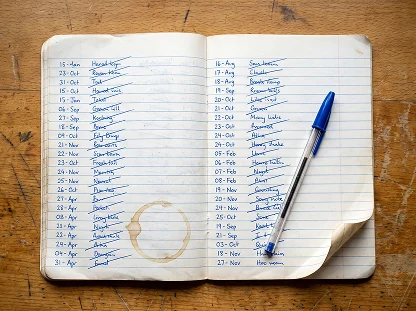
And an oversized dose on a slow road produces exactly the pattern in my notebook. It arrives late, so it's no help with the part where you're lying there. It arrives hard, so you're flattened rather than sleepy. And it's still in you at 7am, which is the fog.
I started calling it the swallow gap. Once I saw it, all fourteen months rearranged themselves. It was never that my brain was unusually stubborn. Every single thing I'd tried took the long way around and compensated by hitting harder.
"Fast-Acting" That Takes 45 Minutes

Week one: "Maybe I just need to give it more time."
Week three: "Is this doing anything at all, or am I imagining the nights it works?"
Week five: standing in the kitchen at 1am reading a pharmacokinetics page on my phone, which is not what the packaging promised.
Because here's the thing about "fast-acting" on a swallowed product. A swallowed dose has to clear the digestive route first — peak blood levels typically land somewhere around the 45-to-60-minute mark. That's not fast. That's roughly the time you spend lying there deciding whether tonight is going to be one of the bad ones.
When "Clinically Studied" Means "The Study Used Something Else"
This is the section that made me angriest, so I'll be careful to be fair in it.
I bought a bottle that said "clinically studied ingredients" and went and found the studies. What I found: trials that used a different form of the ingredient, at six times the dose, in a different population than the one on the box.
Technically not a lie. Practically meaningless.
So let me apply the same standard to the thing I ended up buying, because it would be pretty rich not to.
The botanicals in Melties — valerian root, chamomile, lavender, hibiscus — have real traditional use and some real research behind them. Valerian's active compounds appear to interact with GABA signalling. Chamomile contains apigenin, a well-established relaxant. And the clinical evidence for both is modest and mixed, not overwhelming — small studies, variable results, and trials that generally used considerably larger doses of valerian than any strip contains.
So here's the honest version, which no label will give you: in this product the melatonin is the active ingredient, and the botanicals are supporting players at supporting doses. They're there for the racing-brain part, on a traditional-use basis, not because 50mg of valerian replicates a clinical trial. Anyone telling you their four-botanical stack is doing the heavy lifting at strip-sized doses is doing the thing I just complained about.
I'd rather tell you that and have you believe the rest.
The Real Cost: The Morning Tax
Here's what actually gets you, and it isn't the money.
Every evening becomes a negotiation. Is this doing anything? Do I take one tonight or save it for a night that matters? Am I going to regret this at 7am? And every morning you run the audit — how bad is today, and was it worth it.
Within three months there's a drawer. Mine had six bottles in it. A gummy jar with four gummies left. Two kinds of magnesium. And opening that drawer made me feel slightly worse every time, because it was a physical record of things that hadn't worked.
But the real cost isn't the $412 and it isn't the drawer.
It's that after enough failures you stop believing the problem is your sleep and start believing the problem is you. That everybody else's fixes work fine and yours don't because something in your particular wiring is broken. That was the expensive part. That's the thing I'd pay $412 to get back.

5 Things That Changed When I Switched
I stopped dreading 10pm
The most boring one on the list and the one I'd pick if I could only have one. Bedtime had become a nightly gamble I knew I was probably going to lose. Somewhere in week two it went back to being just… bedtime. An ordinary part of the day.
My mornings stopped being a write-off
This is the actual product, as far as I'm concerned. Not "I fell asleep" — plenty of things made me fall asleep, including two glasses of wine and a Benadryl. Nothing before this let me fall asleep and still have the next morning. I stopped scheduling anything that mattered after 3pm. Now I don't think about it.
I stopped needing more of it
With the gummies there was always a creep. 5, then 10, then wondering about 15. That stopped, and the stopping was a relief I didn't expect. One strip. Same one strip.
Bedtime stopped costing me a decision
No water, nothing to swallow, thirty seconds. That sounds like a convenience feature and for about a week I thought it was. It isn't. Removing the glass of water and the swallowing removed the last little bit of friction where I used to talk myself out of it.
I stopped thinking about sleep during the day
The thing about chronic bad sleep is that it isn't confined to the night. It's a running background process — how many hours did I get, how bad will 3pm be, what do I try tonight. That process quieted down, and I got the attention back.
The Maths Nobody Shows You
The route I took:
$412 ÷ 426 nights = 97¢ a night + 11 products + 6 bottles still in the drawer + roughly 40 mornings written off, at a conservative count + 14 months slowly concluding the problem was me = 97¢ a night, for nothing
The right route:
Melties under $1 a night = 1 product
+ an empty drawer
+ [GUARANTEE] — so if it doesn't work, those nights cost nothing at all
= the same money, with somebody else carrying the risk
The cheapest sleep aid isn't the one with the lowest price on the shelf. It's the one you stop replacing.
My Personal Choice
Full transparency: while going down this rabbit hole, Melties kept coming up.
Here's why everyone mention them: 5mg of melatonin, not 10mg. A strip that melts under your tongue in thirty seconds instead of a pill that has to be digested. And the whole label printed on the box — five ingredients, every dose, no proprietary blend.
But the reasons I stayed on it are the unsexy ones most brands skip past:
- The route, not the ingredient list: it absorbs under your tongue instead of going through your stomach and liver. That's the entire reason a smaller dose can do what a bigger one couldn't — and it's the one thing on a label nobody checks.
- A dose that goes down, not up: every other brand in this category competes by adding milligrams. This one competes by not needing them. After fourteen months in the arms race, that was the only argument I found convincing.
- Built around the morning, not the night: anything can put you under — wine did, Benadryl did. The design brief here is specifically about not still being in your system at 7am. That's a formulation choice, not a marketing line.
- Thirty seconds and no water: I dismissed this as a gimmick for about a week and I was wrong. Friction at bedtime is where good intentions go to die.
- Guarantee that matches the price: 30-day money-back — a signal the company expects it to work, and will stand behind it if it doesn't.
They're running a deal right now — 30% off with free shipping. No code needed.
Not the cheapest option. Also not the one you'll be throwing out wondering what went wrong.
Conclusion
The cheapest sleep aid isn't the one with the lowest price on the shelf. It's the one you're still taking three months from now — and can actually feel working.
Your mornings are worth something. Your patience is worth something. The version of you that isn't running on four hours is worth something. The question was never whether you could afford the better option. It's whether you can keep affording the cheap one.
Melatonin 5mg — The active. Half of what was in the gummies that wrecked my mornings — and on a direct route, not a lossy one.
Valerian root 50mg & Lavender 20mg — Traditional calming herb, supporting dose.
Chamomile 10mg — Traditional relaxant, supporting dose
Hibiscus 10mg — Traditional calming herb, supporting dose
30-day money-back guarantee — No forms to fill in, no auto-reply. One email to a person, and your money back.
Free shipping · 30-day guarantee · 30% off today
Here’s What Others Are Saying
“I’ve tried gummies, teas, and melatonin tablets, but Melties are the first thing I’ve actually stuck with. The strip dissolves in seconds, helps me unwind, and I wake up without that heavy, groggy feeling.”
— Jason M. Verified Purchase
“I was skeptical because nothing seemed to quiet my mind at night. After adding Melties to my bedtime routine, falling asleep feels easier and my 2 a.m. wake-ups are much less frequent.”
— Daniel R. Verified Purchase
“These are perfect for travel. No water, no pills, and no bulky bottle on my nightstand. I just place a strip on my tongue, let it dissolve, and settle into bed.”
— Michael T. Verified Purchase
Limited time offer — 30% off
Melties N°01 Sleep Strips
30% off — no code needed
- 30% off — limited time pricing, no code required
- 30-Day Money-Back Guarantee — no questions
- Free shipping on all orders
Price returns to full when offer ends. Limited stock available.
Bottom Line
At the end of the day, you're not buying a sleep strip. You're buying back your mornings — and the version of yourself that shows up in them.
Every night when I reach for one, I'm reminded:
- I stopped playing the milligram game.
- I'm not paying for a bigger number to make up for a slower route.
- I don't have to be knocked out to sleep.
If you're thinking about sleep aids, do yourself a favour: look at Melties before you spend another $34.99 on something that ends up in the drawer.
You might save months — and feel the best you have in years.
FAQ
Q: Are there any discount codes available?
Yes — Melties is currently offering 30% off already applied at checkout. No code needed.
Q: How long does shipping take?
2-3 business days to US addresses, express at checkout. Ships flat — it'll go through a letterbox.
Q: Do you offer a subscription?
Yes, and you save 30% on every order. Cancel anytime, no fees. Most people find after 90 days they don't want to stop.
Q: What's the refund policy?
30-day money-back guarantee, no questions asked. Email once and a person reads it, usually replying same day, and the refund lands on your card within 3-5 business days
Comments
Can anyone vouch for these? I’m 43 and tired of lying awake with my brain still running at midnight. Thinking about ordering but curious whether they actually work.
About six weeks in. I fall asleep faster and don’t wake up feeling heavy or groggy. The strip dissolves in seconds, which is way easier than swallowing another pill before bed.
Tried gummies, teas, and melatonin tablets. Melties have been the easiest to stick with. One strip, no water, and I’m usually ready to sleep within my normal bedtime routine.
How strong is the flavor? I’m sensitive to anything overly sweet.
The Lavender flavor is pretty mild. It’s slightly sweet for a few seconds, then the strip dissolves completely. Much less sugary than sleep gummies.
Took a pack on a work trip last week. No bottles, no water, and barely takes up any space. Slept surprisingly well in the hotel.